Tech Stack
Frontend, backend, ML, database, broadcast, and STT layers — the libraries Rhema is built on and the reasons we picked them.
| Layer | Technologies |
|---|---|
| Frontend | React 19, TypeScript, Tailwind CSS v4, shadcn/ui, Zustand, Vite 7 |
| Backend | Tauri v2, Rust workspace with seven crates |
| AI / ML | ONNX Runtime (Qwen3-0.6B embeddings), Aho-Corasick, Fuse.js |
| Database | SQLite via rusqlite (bundled) with FTS5 |
| Broadcast | NDI 6 SDK via dynamic loading (libloading FFI) |
| STT | Local Whisper via whisper.cpp, or Deepgram WebSocket + REST (tokio-tungstenite) |
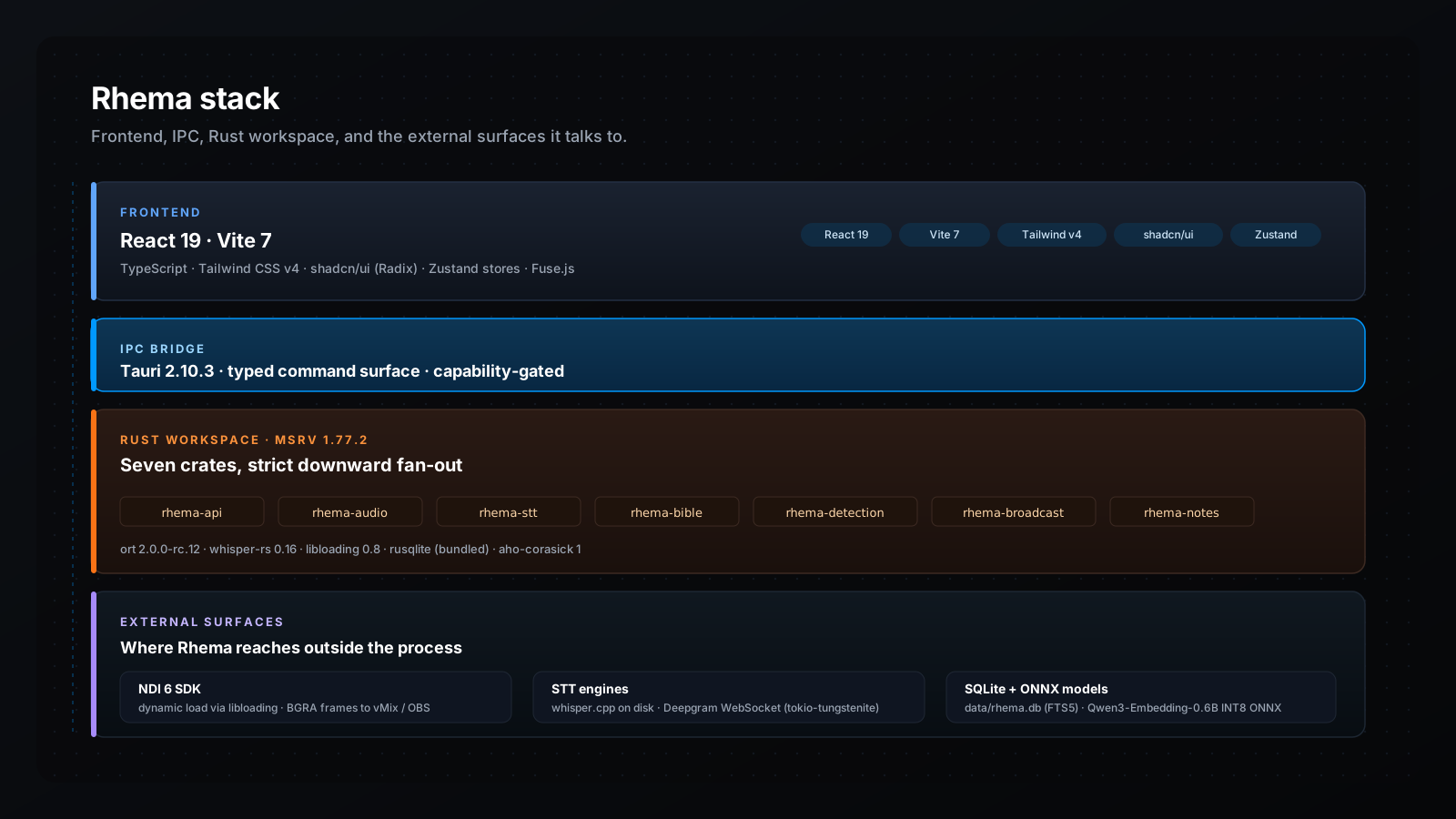
Layer-by-layer view of the stack: React + Tailwind on top, Tauri IPC bridge in the middle, the Rust workspace below, and the external surfaces (NDI sender, STT engines, SQLite-on-disk) at the edges. Click to expand.
Frontend
React 19 + Vite 7
Modern React with concurrent features. Vite 7's dev server hot-reloads in under a frame.
Tailwind CSS v4 + shadcn/ui
Utility-first styling with shadcn primitives layered on Radix. Custom components live in src/components/ui.
Zustand stores
Audio, transcript, Bible, queue, detection, broadcast, and settings each have their own slice — no Redux ceremony.
Backend
The Rust side is a Cargo workspace of seven crates, each with a single clear responsibility. See the Rust crates page for the breakdown.
tauri = "2.10.3" wires Rust commands to React via a typed IPC
surface. Workspace MSRV is rust-version = "1.77.2". The webview is
locked down with a restrictive CSP to
prevent script injection and unauthorized data exfiltration.
ML / detection
The detection pipeline is intentionally heterogeneous:
- Aho-Corasick (
aho-corasick = "1") for direct reference parsing — compiled once, scans in linear time with negligible memory. - Qwen3-Embedding-0.6B for semantic search, exported to ONNX and
quantized to INT8 (via
optimum-cli onnxruntime quantize --arm64) so a normal CPU keeps up. - ONNX Runtime through the
ort = "2.0.0-rc.12"Rust crate for inference (gated behind theonnxfeature onrhema-detection). - Brute-force cosine similarity over the embedded verses
(~31k × 1024 dims). The file
semantic/hnsw_index.rsis named after a future plan; today it scans linearly because the dataset is small enough that the simpler approach wins. - Fuse.js on the frontend for instant fuzzy search over the recent
transcript context (
src/lib/context-search.ts).
Database
A single SQLite database with FTS5 holds every translation, cross-
reference, and metadata table. We use rusqlite with the bundled
feature so the binary is self-contained — no system SQLite required.
Broadcast
The NDI 6 SDK is loaded dynamically via libloading so the binary
doesn't depend on the SDK at link time. This keeps the app legally
distributable and lets it run fine without NDI installed (the broadcast
surface just doesn't appear).
STT
Two engines, one transport:
- Whisper runs locally via
whisper.cpp, compiled bybindgenduring the first build. - Deepgram streams over a WebSocket using
tokio-tungstenite, with a REST fallback that uploads short windows when the socket drops.
Both feed a unified transcript stream so the rest of the pipeline doesn't care which engine is active.